Google UX Design Certificate Case Study - Dunder Mifflin
App, Interaction Design
2025
Lead Designer
Overview
Problem Statement
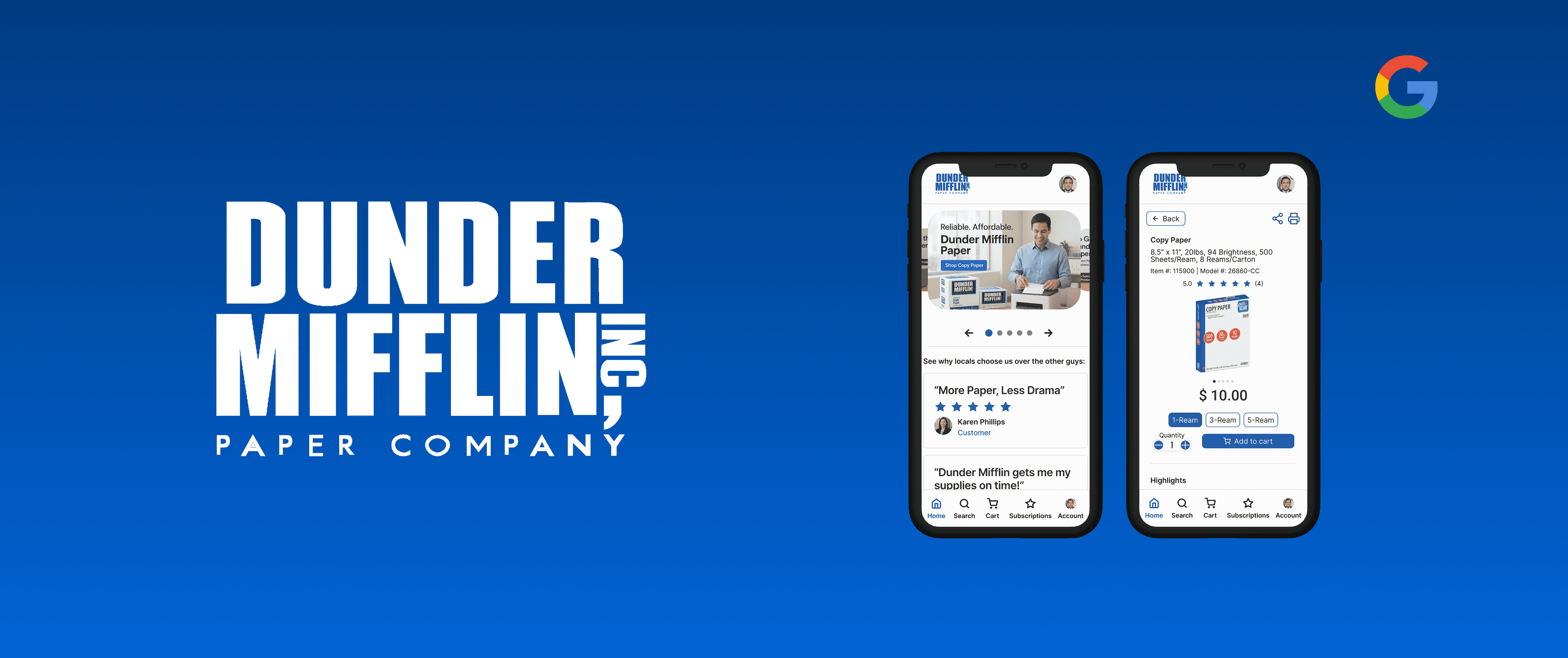
Design a modern e-commerce application to transform the fictional Dunder Mifflin legacy brand into a customer-centric digital supplier.
Goal
Improve product discovery and streamline the supply ordering process.
Process
Conducted foundational research and a competitive audit to define market opportunities. Developed user personas and performed usability studies on low-fidelity prototypes, which highlighted friction in navigation and the checkout flow. Iteratively refined the design, sitemap, and visual elements to address user feedback and create a final polished mobile application.
Solution
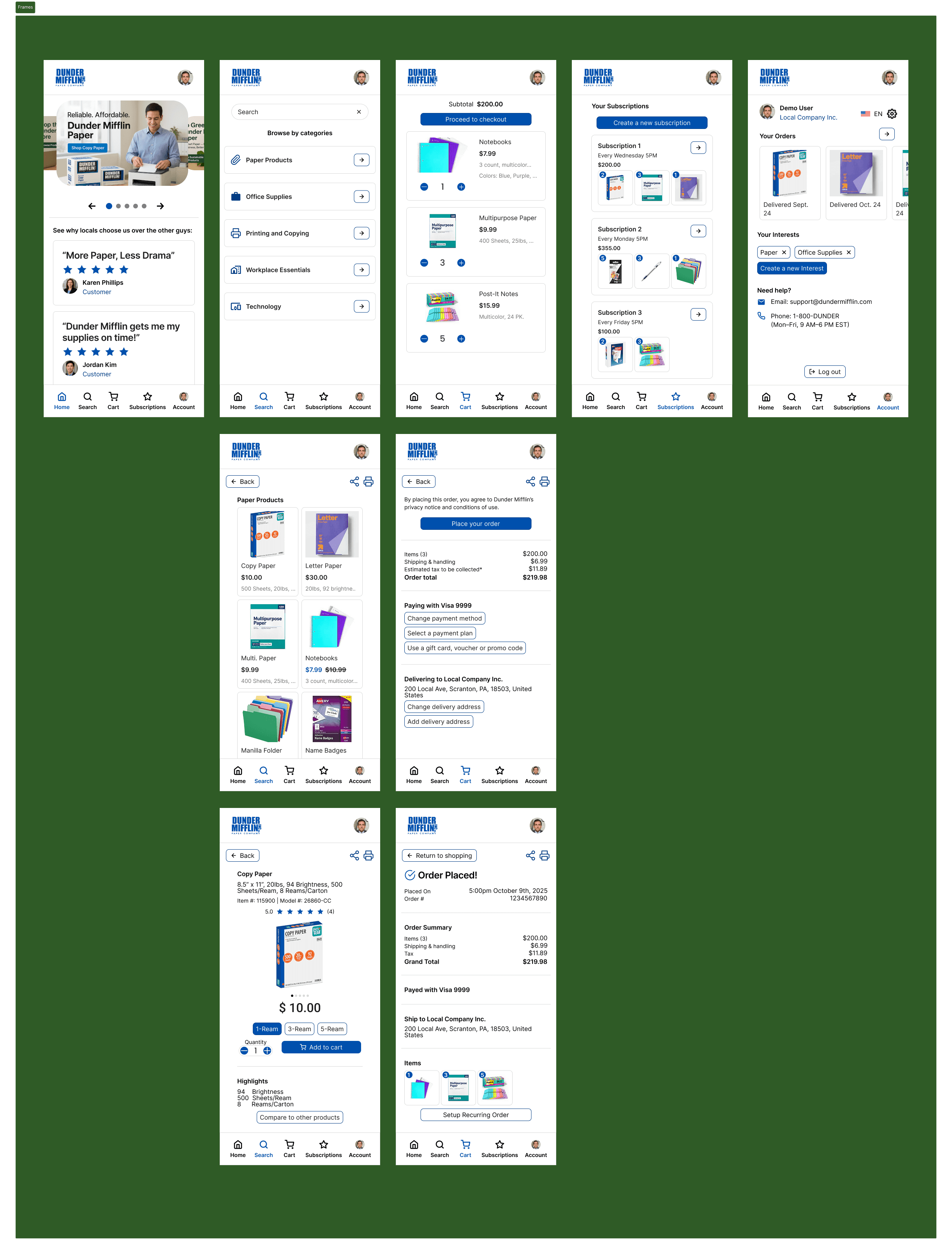
The resulting design successfully transformed Dunder Mifflin into a modern, character-driven digital brand. The e-commerce prototype balanced functionality and personality, significantly improving the user experience for purchasing office supplies while preserving brand authenticity.
Tools Used




Research
Target Audience
Office administrators managing recurring supply orders
Small business owners seeking dependable bulk purchasing options
Corporate buyers looking for consistent quality and pricing
Home office users who want easy online ordering and fast delivery
Challenges and Constraints
Modernizing a Legacy Brand
Balancing Dunder Mifflin’s well-known, nostalgic identity with the need for a modern, professional e-commerce experience required careful design decisions to avoid losing its charm.
Limited Brand Consistency
Existing assets (logos, colors, typography) lacked cohesion, making it difficult to establish a unified visual system that felt authentic yet updated.
Balancing Fictional and Real-World Context
Since Dunder Mifflin originates from The Office, there was a challenge in grounding the experience in realism while still nodding to the show’s playful cultural roots.
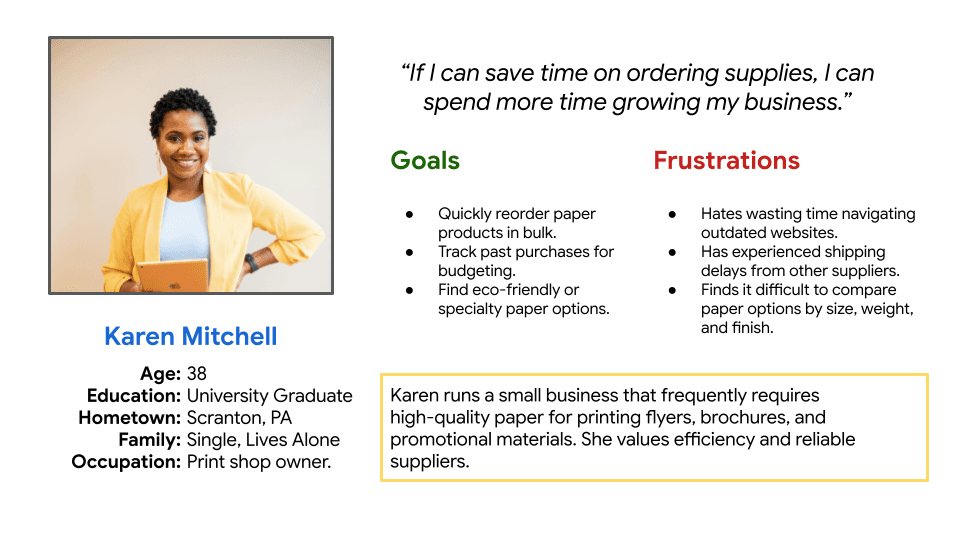
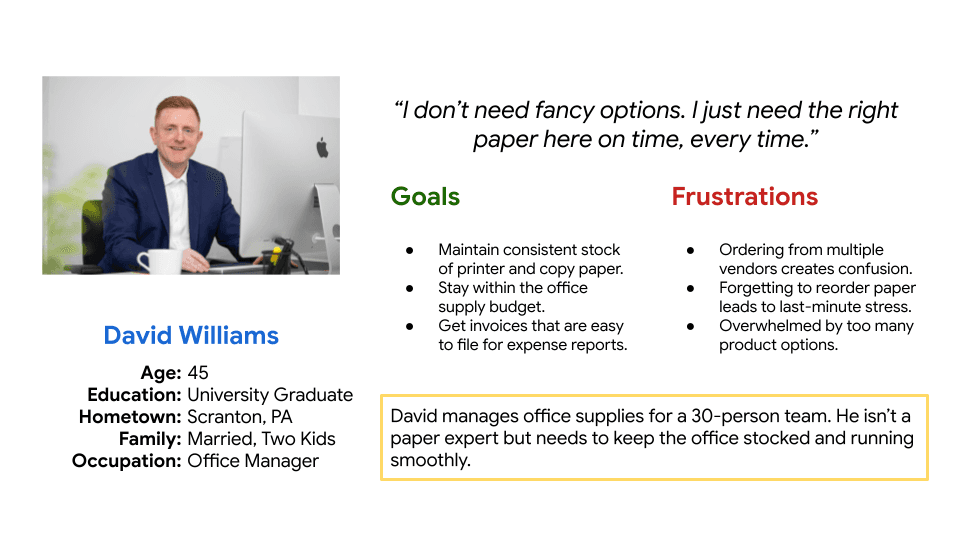
User Personas
Competitor Analysis
To benchmark modern standards, I conducted a competitive audit report and analyzed several leading competitors
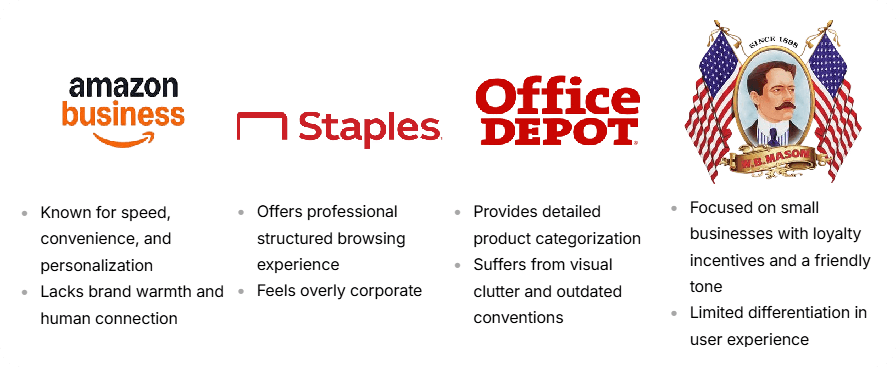
Through this analysis, it became clear that Dunder Mifflin’s opportunity lay in combining the efficiency of large competitors with a distinctly human, personable brand identity, a balance few in the market had achieved.
Process
Sketches and Wireframes
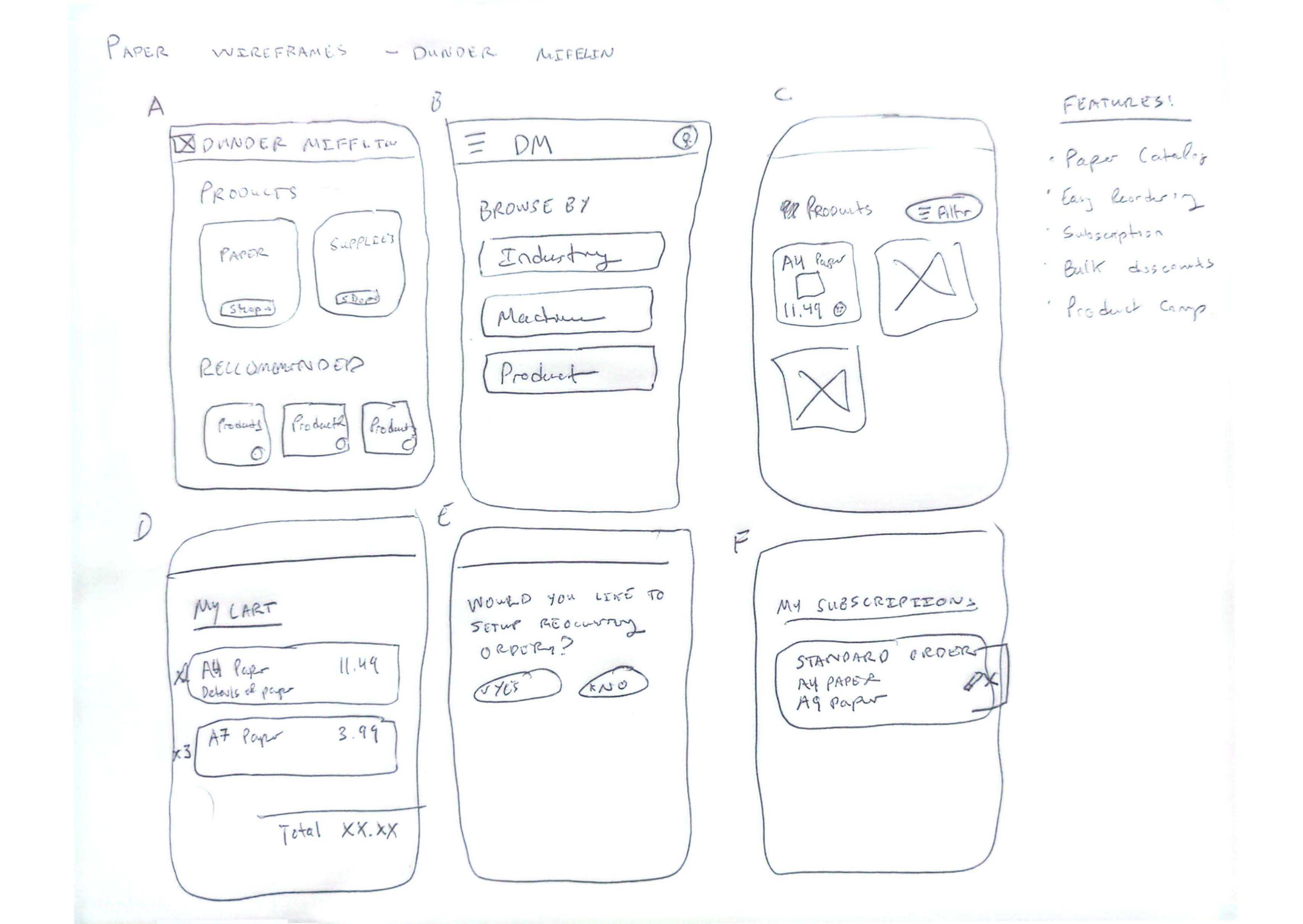
After completing the research phase, I translated key insights into paper sketches to establish the structure and flow of the new Dunder Mifflin app. For this stage, I prioritized getting ideas on to paper and identifying the initial concepts of the app along with a initial feature set.
Low Fidelity Mockups
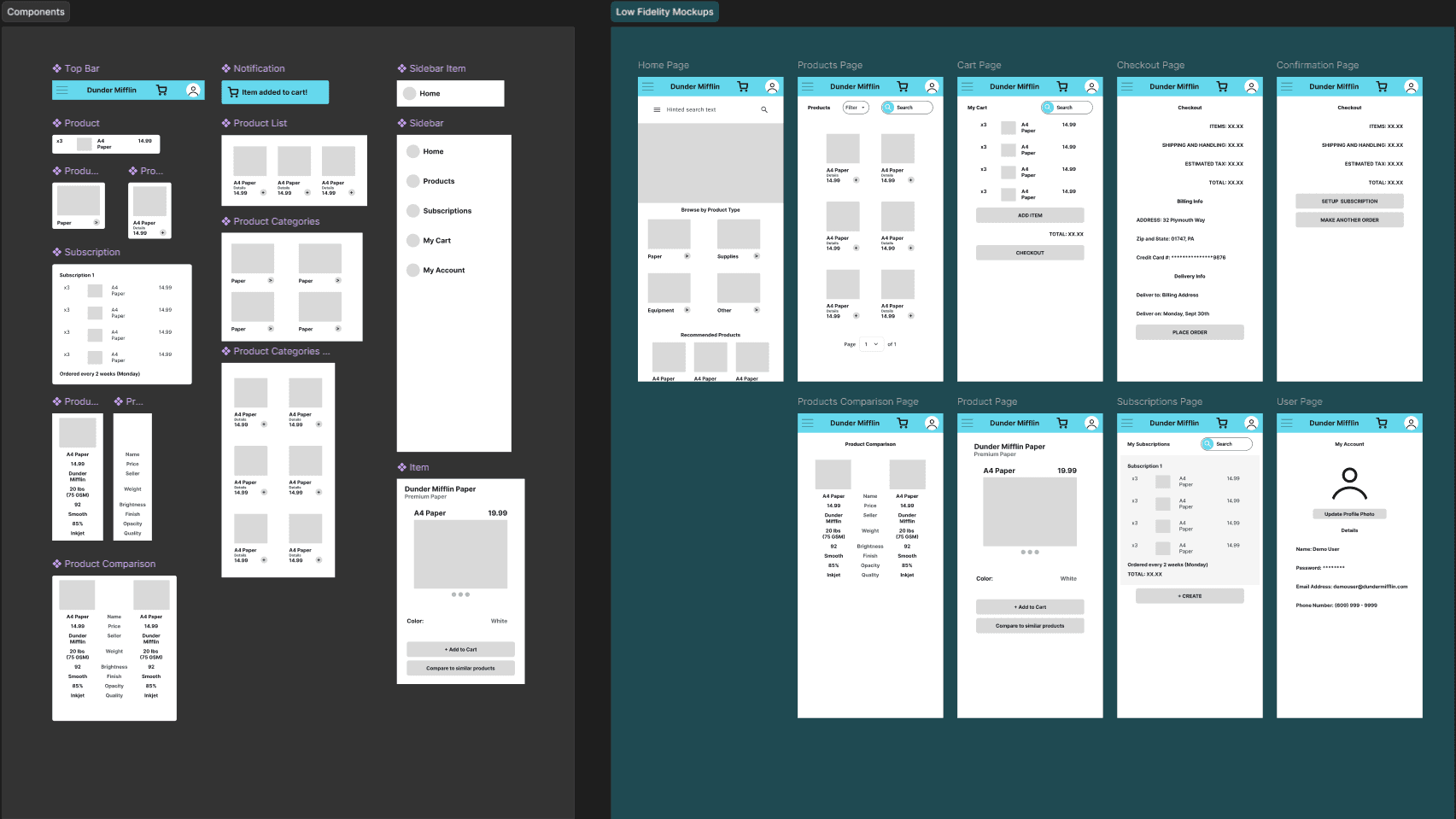
After completing the wireframes I moved to creating a set of low fidelity mockups based on these designs. I knew what I was making wasn’t perfect, but it would help me to identify the flaws in my approach.
Low Fidelity Prototype
Usability Study
To inform the design, I conducted a usability study on some of the mockups I created for Dunder Mifflin’s app to understand how users interacted with the experience and where they encountered friction. Participants included a few local office managers who went through the process of ordering supplies for their companies - part of a potential customer base.
The study revealed key insights:
Users struggled to locate specifics about a given product.
Found the checkout process confusing.
Felt the navigation provided was unintuitive.
These findings helped to shape my design decisions, guiding improvements to navigation, product details, and visual hierarchy to create a more intuitive and engaging user experience.
Sitemap
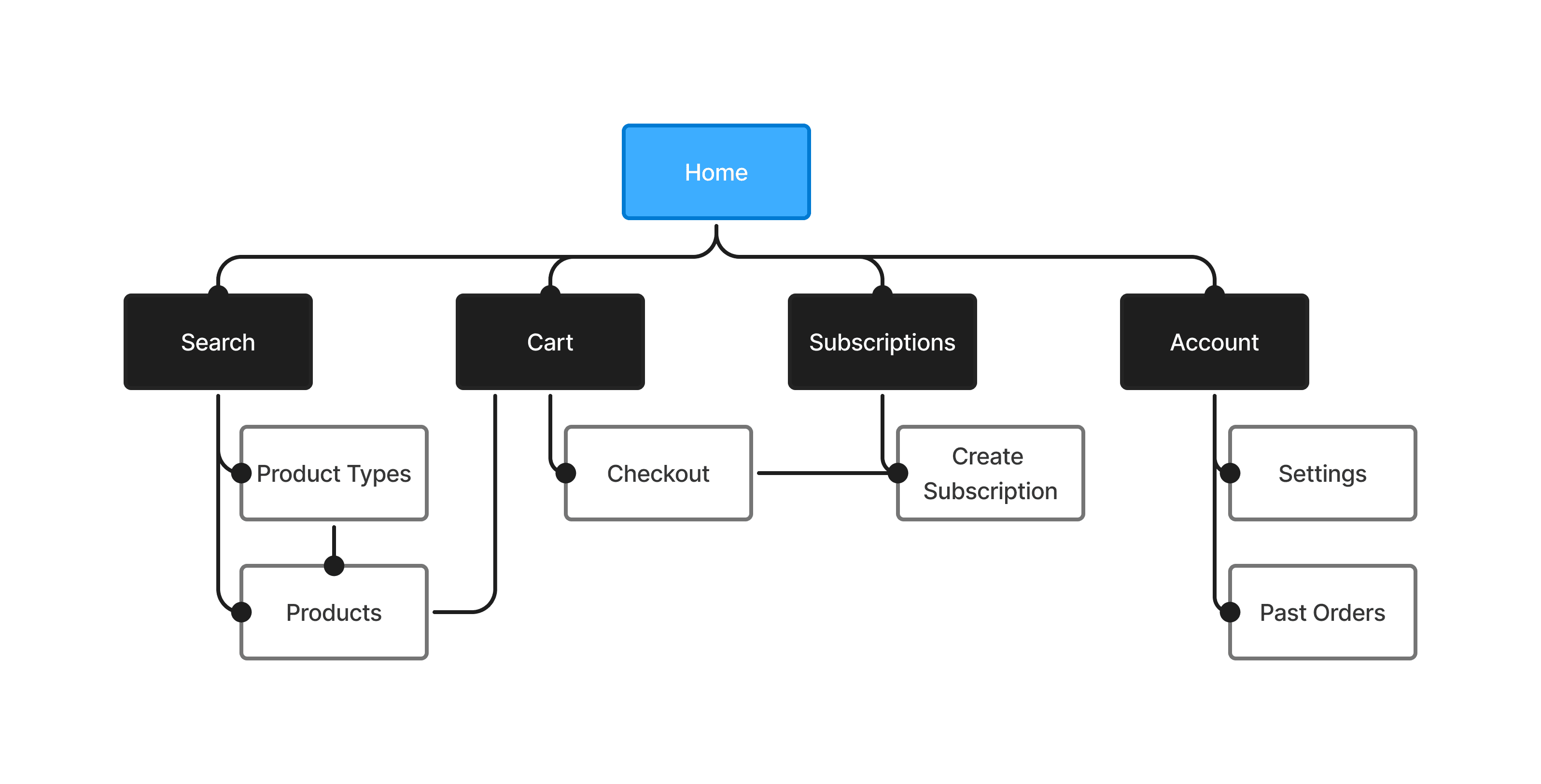
Using the insights I gained from the usability study, I created a sitemap to better organize the pages and improve user navigation.
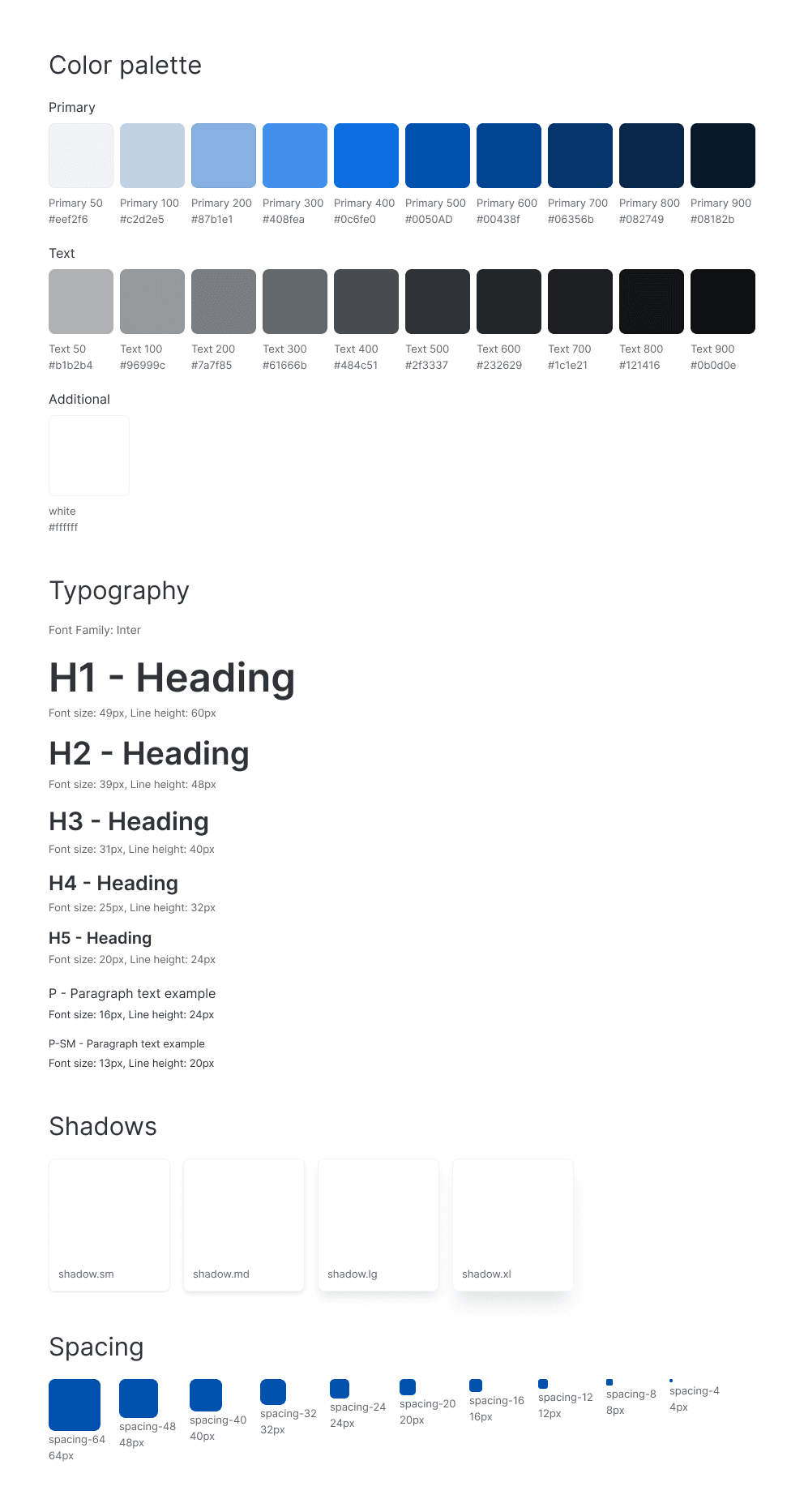
Sticker Sheet / Style Guide
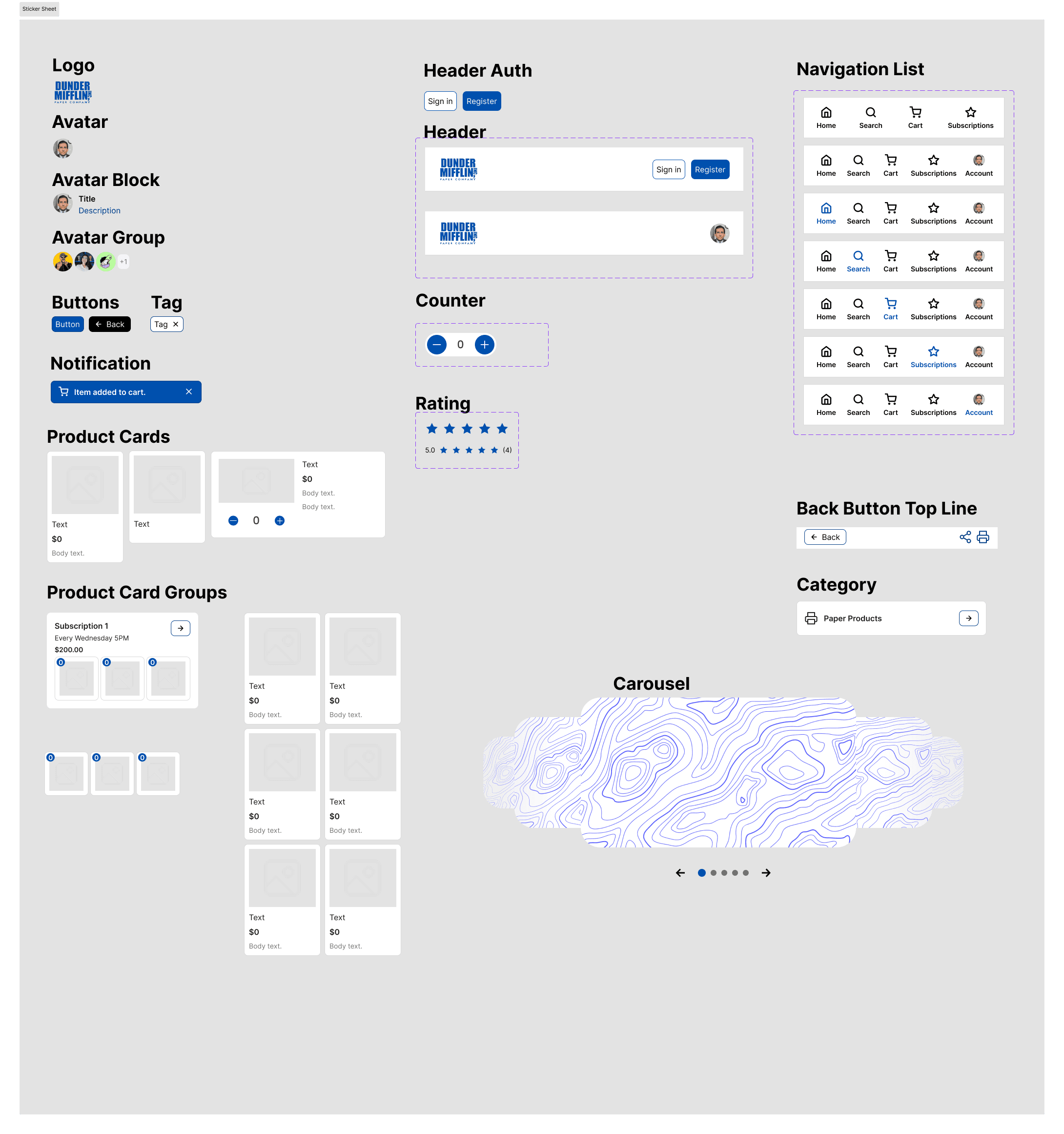
In order to improve the overall look and feel I spent some time creating a sticker sheet/style guide to help improve the overall consistency of the application.
Result
High Fidelity Design
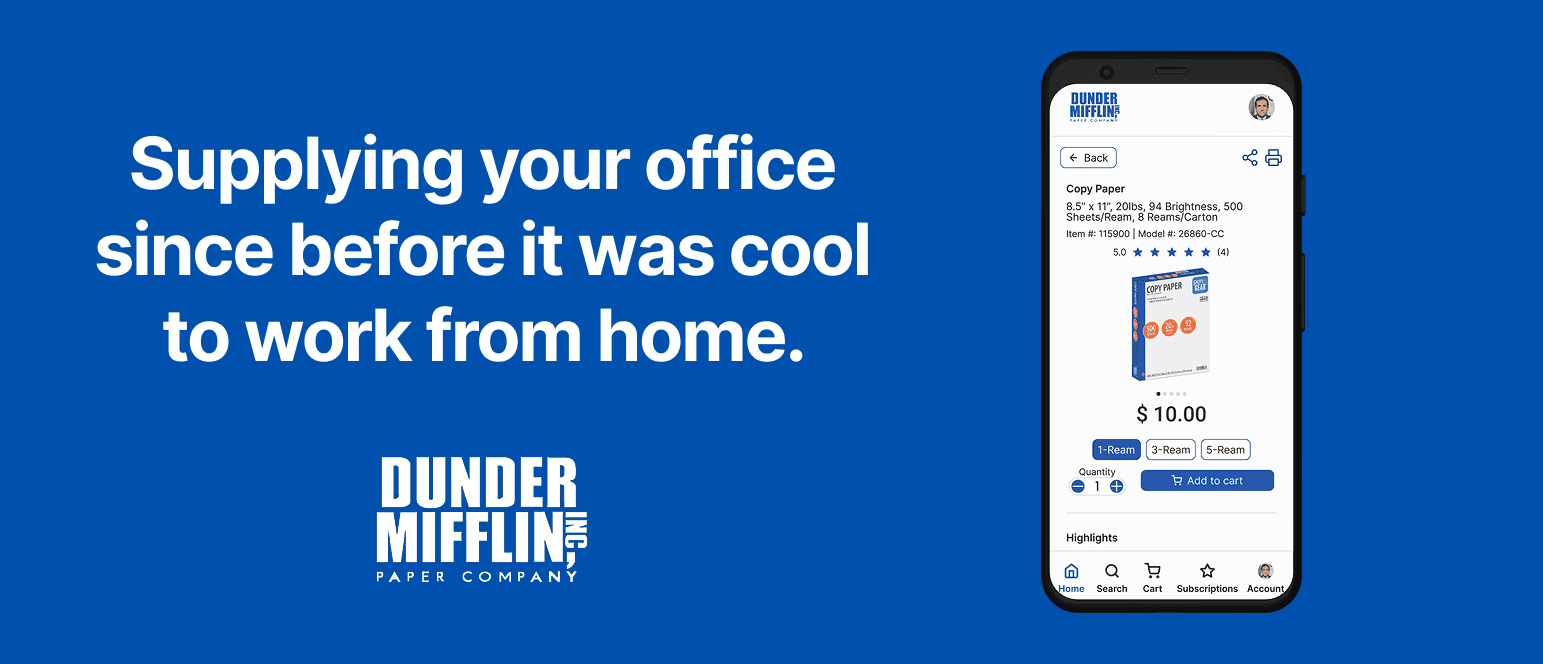
High Fidelity Prototype
Conclusions
The Dunder Mifflin design successfully transformed a nostalgic, paper-based brand into a modern digital experience that feels both credible and character-driven. By grounding design decisions in research and usability testing, I was able to create a platform that balances functionality and personality. This made it easier for users to find, order, and trust Dunder Mifflin as their go-to office supply provider.
Working solo on this project challenged me to move quickly and think holistically, managing every stage from research to final UI design within a tight timeline. The process reinforced the importance of aligning brand identity with user experience, especially for companies with strong cultural recognition.
In the end, the project showcases how thoughtful design can modernize even the most traditional industries, proving that a company like Dunder Mifflin can stay true to its roots while evolving to meet the needs of today’s customers.
What I would do differently
If I had to start over on this project I would have:
Expanded the design to handle order and account management.
Redesigned the home page to be further functional.
Seen how to improve this project using Generative AI similar to SquadUp.